
Find a smoothie to make at home
Choose the shop smoothie you enjoy and see a homemade recipe to try. Compare the ingredients and estimated nutrition, then adjust it to your taste.
- Free to use
- No signup
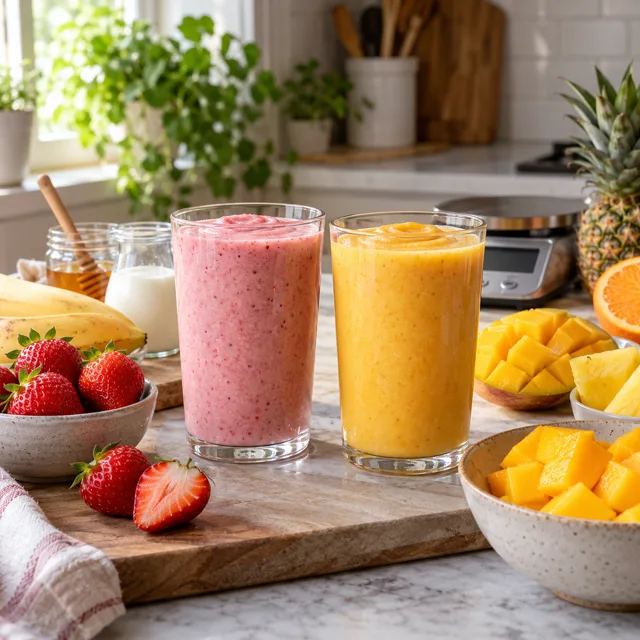
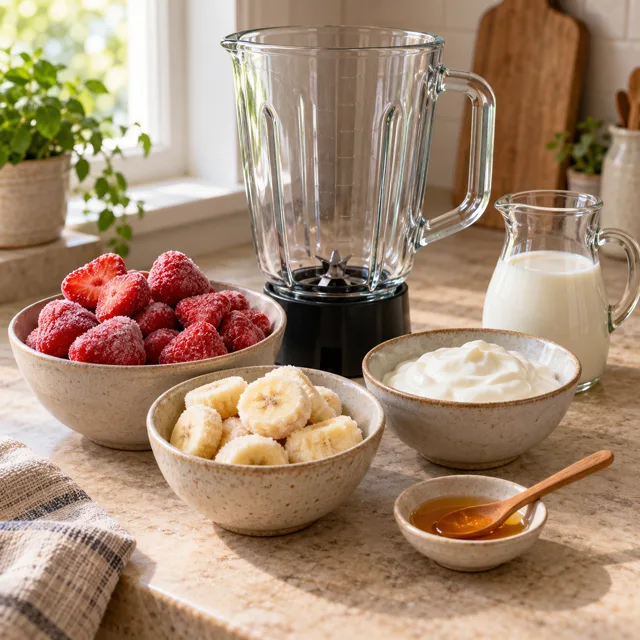
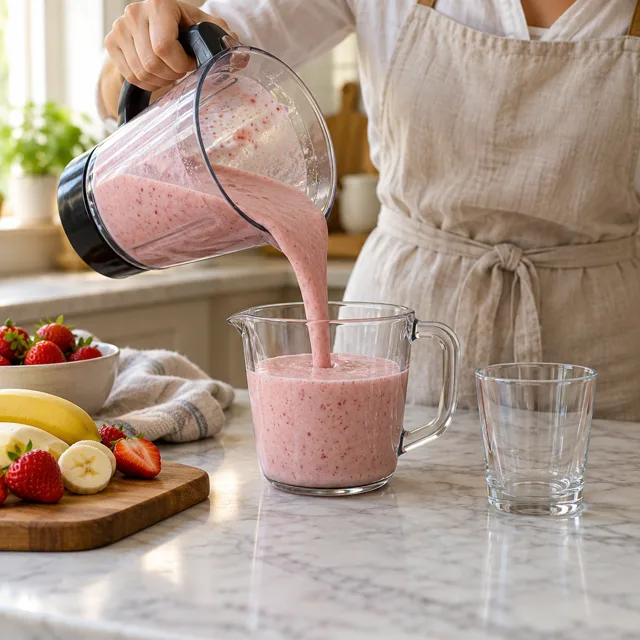
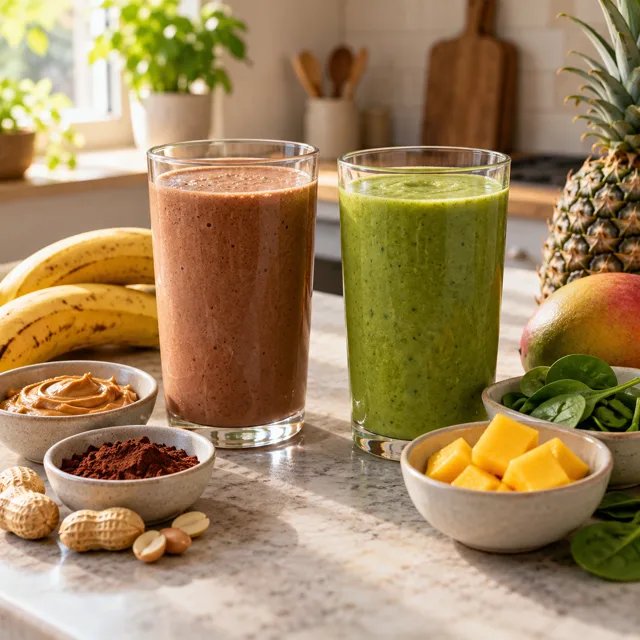
Generated photographs of homemade recipe examples, not authentic shop drinks.
A close match on calories, and you control the sugar and portion at home.
Chain figures are each chain's own published nutrition for a standard cup. Recipes and sizes vary by location, so treat the match as a starting point you can tune to taste.
Use the recipe as a starting point
These are our homemade suggestions. They aren’t the shop’s recipes, and the taste and nutrition may differ.
Check the serving size
A shop cup and a homemade serving may be different sizes. Compare both the amount and the nutrition before drawing a conclusion.
How a copycat is matched
Smoothie shops publish their ingredients and nutrition, and many of their drinks follow a simple pattern: a fruit blend, a base such as juice, yogurt or milk, and an add-in. The matcher looks at what you liked about a shop drink and finds a homemade blend with similar fruit, texture and nutrition, built from ingredients you can buy.
Why homemade versions often have less sugar
Many shop smoothies use juice blends, sweetened bases or turbinado sugar to get a consistent taste. At home you can keep the same fruit and swap sweetened bases for unsweetened milk or plain yogurt. The result tastes close and usually comes in lower in sugar and calories per glass.
Matching size, not just flavor
Shop cups are often larger than a homemade glass. When you compare nutrition, compare the same size. The matcher shows per-serving numbers so you can see whether the difference comes from the recipe or simply from a bigger cup.
Saving money at home
A homemade copy built from frozen fruit and pantry staples usually costs a fraction of a shop cup. Use the smoothie cost calculator with your own grocery prices to see the difference for your area.
You might be wondering…
Is this an official shop recipe?
No. The recipes are inspired by familiar smoothie flavors. For an order’s ingredients or allergens, ask the shop directly.
Can I make a Smoothie King or Tropical Smoothie copycat at home?
Yes. Most shop smoothies are fruit, a base and an add-in. The matcher suggests a homemade blend with similar ingredients and nutrition.
Will a copycat smoothie taste exactly the same?
Close, but not identical. Shops use their own fruit blends and bases. Adjust sweetness and thickness to taste.
Is a homemade copy healthier?
It is often lower in sugar because you control the base and sweeteners. Compare the numbers per serving to be sure.
Is it cheaper to make shop smoothies at home?
Usually, yes, especially with frozen fruit. Check your own prices with the smoothie cost calculator.
Where do the shop numbers come from?
From the nutrition information the chains publish. Recipes and sizes change, so check the shop's current guide for the latest figures.
Estimates, not advice. Every figure on this page is calculated from published per-100 g reference values and standard household measures, so your own brands, portions and equipment will move it. Nothing here is medical, nutritional or dietetic advice — talk to a qualified professional before acting on it, particularly if you are pregnant, managing a health condition, or feeding a child.