
With orange juice
1 cup orange juice
344kcal per serving
- Protein
- 5 g
- Fiber
- 7 g
- Sugar
- 62 g
- Carbs
- 85 g
Our starting blend, with orange juice as the liquid.
Wondering what’s in your usual smoothie? Add your ingredients and see the calories, protein and more for each glass.
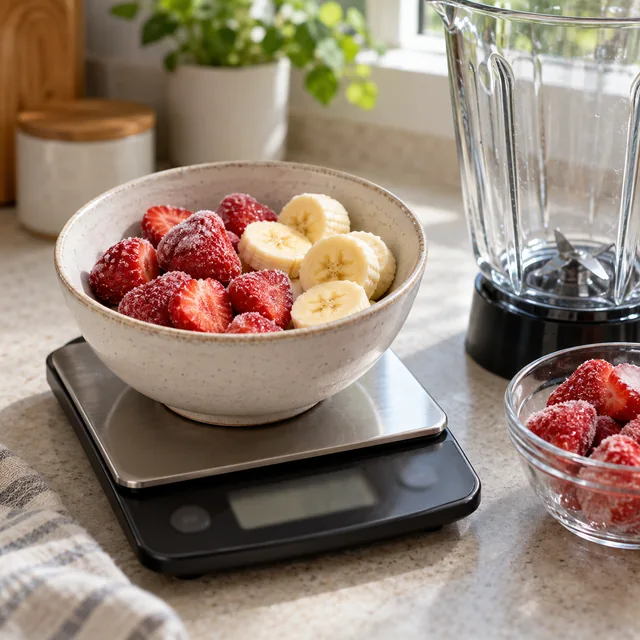
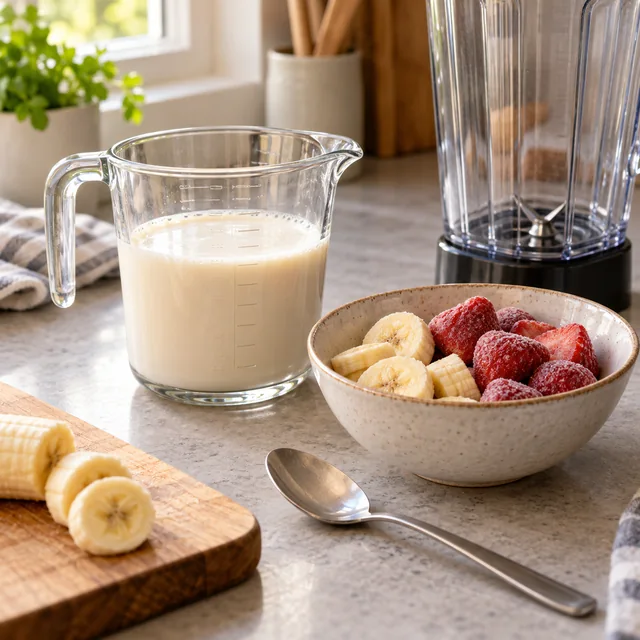
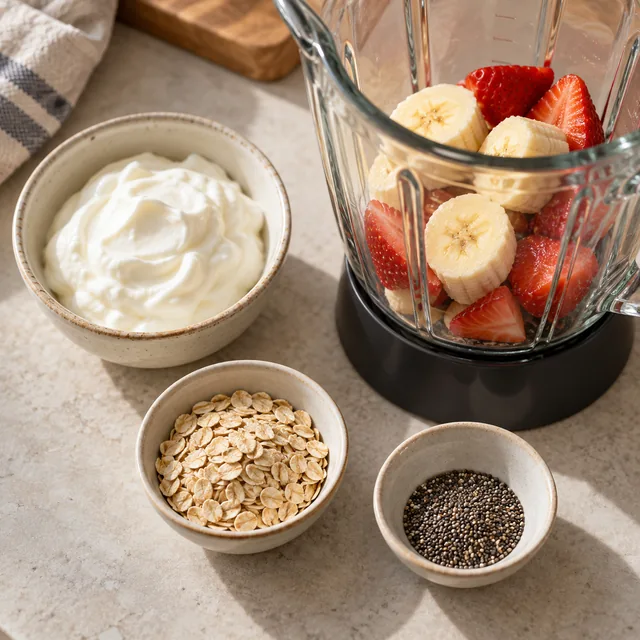
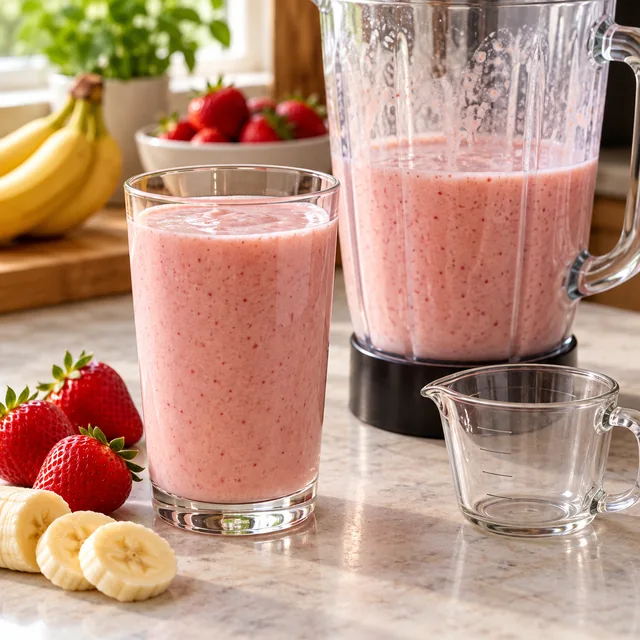
Start with your usual ingredients. A berry blend is already added to get you started. Tap ingredients to add or remove them, then adjust the amounts in your smoothie.
288 calories a serving across 4 ingredients. Try changing an amount to see how your glass changes.
Maybe it’s banana and peanut butter, or a handful of berries with yogurt. Add what you use, then adjust the amounts to match your blender. Making breakfast for two? Set the servings to two to see what’s in each glass.
You can change one thing at a time. Try a different milk or a little more yogurt and see how the numbers move. You don’t need to get everything perfect to use this as a starting point.
Have a more specific question? You can take a closer look at sugar, work out how much protein powder to add, or find an ingredient swap.
It depends far more on the liquid and the extras than on the fruit. The same mango and banana come to anywhere from about 233 to 363 calories in the three versions compared below, only because the liquid and add-ins change.
Juice, nut butter, oats, seeds and sweeteners raise the total fastest. Water, ice, leafy greens and unsweetened milk barely move it. To compare typical recipes before you build your own, see how many calories are in a smoothie, or look up any single item in the smoothie ingredients list with calories, protein and sugar per serving.
Start with mango and banana. Swap the juice for water, or add yogurt and chia for a creamier blend. Here’s what each version adds up to.
1 cup orange juice
Our starting blend, with orange juice as the liquid.
1 cup water
111 fewer calories than the juice version. The fruit stays the same.
1 cup water · ½ cup greek yogurt · 1 tbsp chia seeds
15 g more protein and 4 g more fiber than the water version.
Want to try this with your usual smoothie? Add your ingredients above, then change the liquid and see how the numbers compare.
Try a swap in the calculatorHave a look at the calorie guides for fruit smoothies, green smoothies and bowls. They’ll give you a starting point before you build your own.
Help me compare smoothiesStart with what you put in your blender. Pick your ingredients, adjust the amounts, and choose how many glasses you’re making. You’ll see an estimate for each glass.
Usually the extras rather than the fruit. Fruit juice as the liquid, nut butter, oats, seeds, full-fat yogurt and sweeteners add up quickly. Swap juice for water or unsweetened milk and measure the nut butter to bring the total down.
It depends what the smoothie is for. As a meal replacement with protein and fiber, 400 calories can be reasonable. As a snack next to breakfast, it is a lot. Add your ingredients above to see where yours lands, then compare it with your own daily target.
Yes. You’ll also see protein, carbs, fat, sugar and fiber for each serving. Try changing an ingredient or amount to see what it adds.
Each ingredient has reference nutrition values and a standard serving weight. The calculator scales those values to the amounts you choose.
They’re estimates. Your milk, yogurt or protein powder may have different numbers on the label, and a heaped cup is different from a level one. If you’re tracking closely, check your labels and weigh your ingredients.
Try the smoothie bowl calorie calculator. It includes toppings too, so you can count the granola, fruit and spoonful of nut butter along with your blend.
Yes. Choose orange juice in the liquid section if that’s what you’re using. The comparison above shows what changes when you use water instead, keeping the same amounts of mango and banana.
Add everything for the full batch, then set the number of servings. Making two equal glasses? Choose two servings to see the estimate for each one.
Estimates, not advice. Every figure on this page is calculated from published per-100 g reference values and standard household measures, so your own brands, portions and equipment will move it. Nothing here is medical, nutritional or dietetic advice — talk to a qualified professional before acting on it, particularly if you are pregnant, managing a health condition, or feeding a child.