
Smoothie sugar calculator
Add what you usually put in your smoothie, including the milk and any sweetener. You’ll see the estimated sugar per serving and how it changes when you swap an ingredient.
- Free to use
- No signup
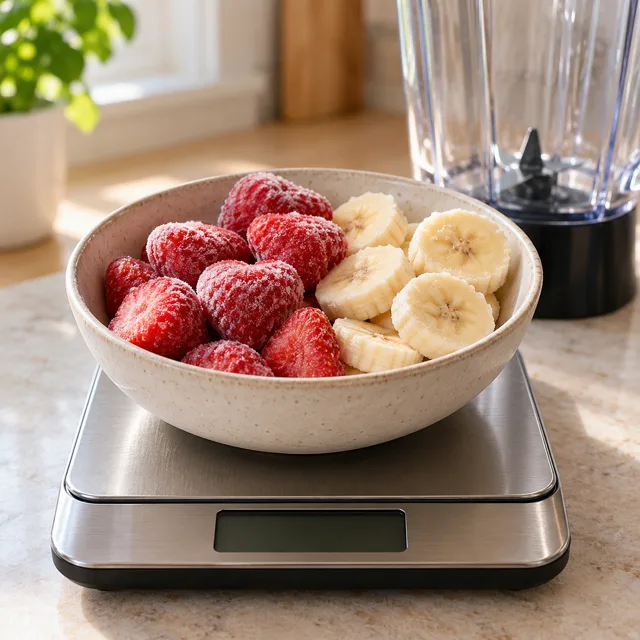
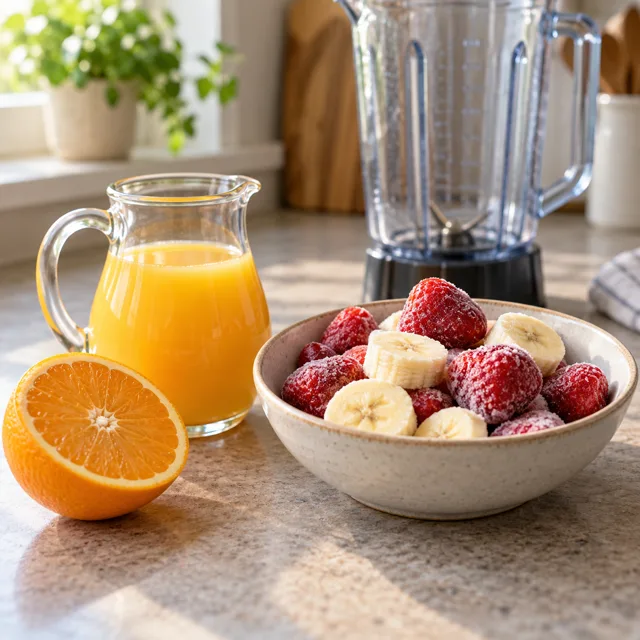
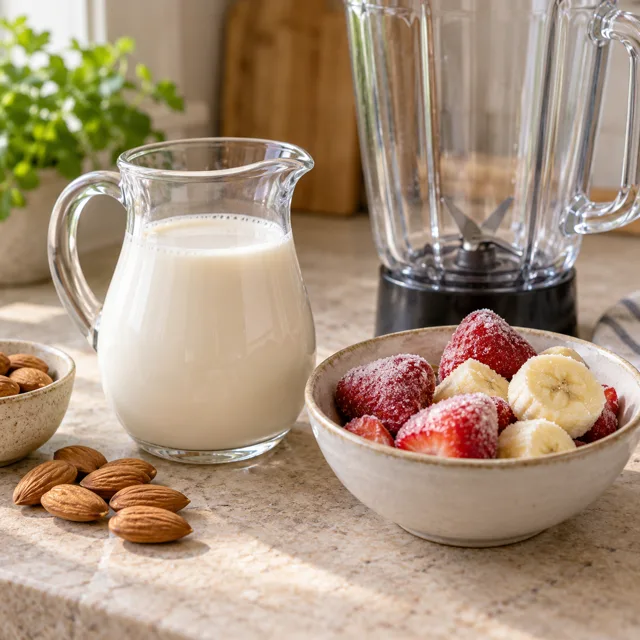
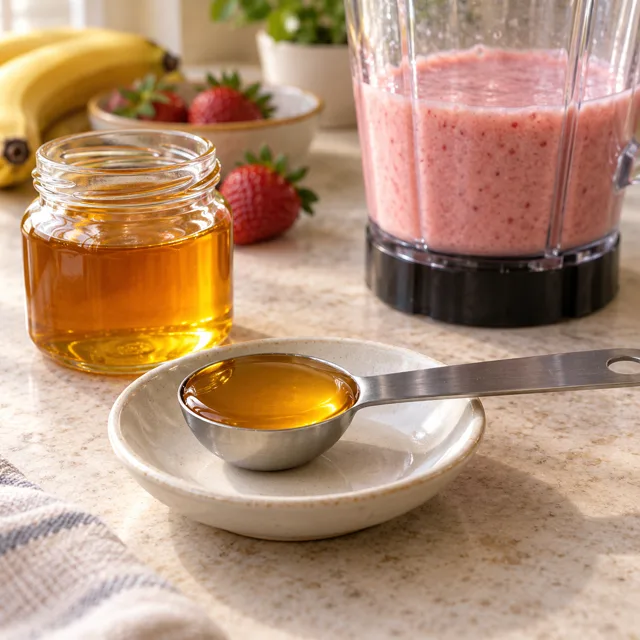
Totals below are per serving 1
Add your own brand from its label
29.3 g of total sugar per serving. This includes sugar from fruit, milk and any sweeteners you selected.
Count the whole recipe
Fruit, juice, milk and sweeteners can all contribute sugar. Measuring your usual amounts makes the comparison more useful.
Try one change at a time
Compare your current smoothie with a different liquid or a smaller amount of sweetener. Keep the version you actually enjoy drinking.
Where smoothie sugar comes from
Most of the sugar in a homemade smoothie comes from fruit, fruit juice and any sweetener you add, such as honey, maple syrup, dates or sweetened yogurt and milk. Fruit juice is the biggest surprise for many people: it adds sugar without the fiber of whole fruit. The calculator shows the sugar for each glass so you can see which ingredient is doing most of the work.
Whole fruit versus juice
Blending whole fruit keeps its fiber in the glass, which makes a smoothie more filling than juice with the same sugar. If your recipe uses juice as the liquid, try swapping it for water, unsweetened milk or a mix of half juice and half water. You keep some of the sweetness and cut the sugar per serving.
Easy ways to lower the total
Use unsweetened milk and plain yogurt, measure sweeteners rather than pouring them, and lean on lower-sugar fruit like berries. Adding greens, seeds, oats or yogurt gives the smoothie more body without adding much sugar. Ripe frozen banana is very sweet, so half a banana often does the job of a whole one plus honey.
Reading the number in context
A number on its own does not tell you whether a smoothie suits you. A smoothie that replaces breakfast can carry more than one that sits next to a meal. If you are managing blood sugar or following medical advice on sugar, talk to your doctor or dietitian about what fits your day.
You might be wondering…
Does fiber cancel out sugar?
No. Fiber and sugar are separate figures. This calculator estimates total sugar; it doesn’t predict your blood glucose response.
How much sugar is in a typical fruit smoothie?
It depends on the fruit, liquid and sweeteners. Smoothies made with juice and sweetened yogurt are usually much higher than ones made with water or unsweetened milk. Add your ingredients to see your own total.
Is the sugar in fruit smoothies bad for you?
Whole fruit comes with fiber, water and nutrients, which is different from added sugar. Still, sugar adds up in a large glass. Keep portions sensible and use juice and sweeteners sparingly.
What fruit has the least sugar for smoothies?
Berries such as raspberries, blackberries and strawberries are lower in sugar than banana, mango or pineapple. Avocado and greens add body with very little sugar.
Does blending fruit turn it into added sugar?
Blending breaks fruit down but keeps the fiber in the glass, unlike juicing. Nutrition labels treat whole blended fruit differently from juice and sweeteners.
How can I sweeten a smoothie without sugar?
Use ripe frozen fruit, a little vanilla or cinnamon, or a small amount of a sweetener you are comfortable with. Taste before adding anything extra.
Estimates, not advice. Every figure on this page is calculated from published per-100 g reference values and standard household measures, so your own brands, portions and equipment will move it. Nothing here is medical, nutritional or dietetic advice — talk to a qualified professional before acting on it, particularly if you are pregnant, managing a health condition, or feeding a child.